A Cottagecore Guide To A Good Summer
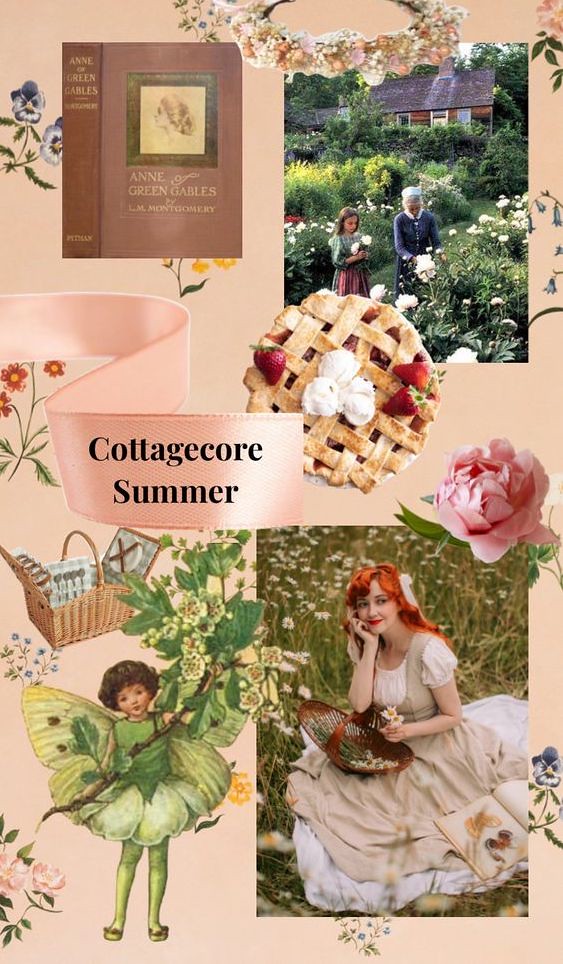
One of the enduring qualities of cottagecore is not the floral print dresses or picnics in the garden, but rather the emphasis on a quiet life well lived. The aspirations of a typical cottagecore aficionado is the opposite of what hustle culture encourages; instead of bigger houses and newer cars, most aspire to own little cottages in the countryside, instead of shopping hauls they dream of mended clothes and learning to sew, or perhaps shopping hauls of flower bulbs and herbs for the garden! So much emphasis is on slowing down, contentedness, appreciating nature and the seasons around you. So when I aspire to a Cottagecore Summer (or quite similarly a Hobbit Girl Summer) my bucket list is short and achievable. My goals are to slow down and savor the season and hopefully this list will help inspire your own Cottagecore Summer.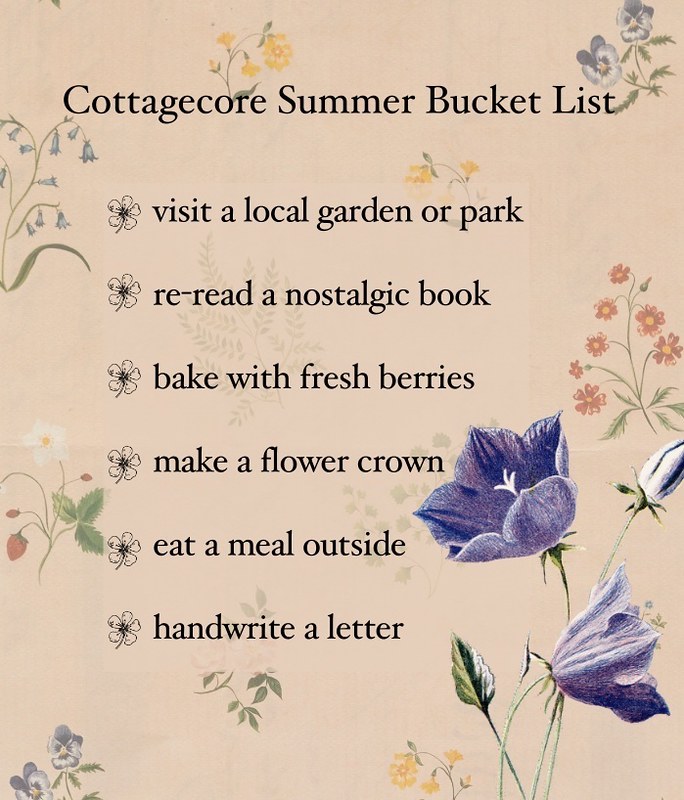 Visit a local garden or park. I can not think of anything worse than wasting a good day indoors…although of course many of our schedules don’t allow outdoor adventures at the drop of the hat! However with the sun setting later many parks have extended their hours and getting a walk or visit into your local garden after work is more possible now than ever. I really enjoy visiting National Trust gardens as they’re so well looked after and always feature a wide variety of flowers.
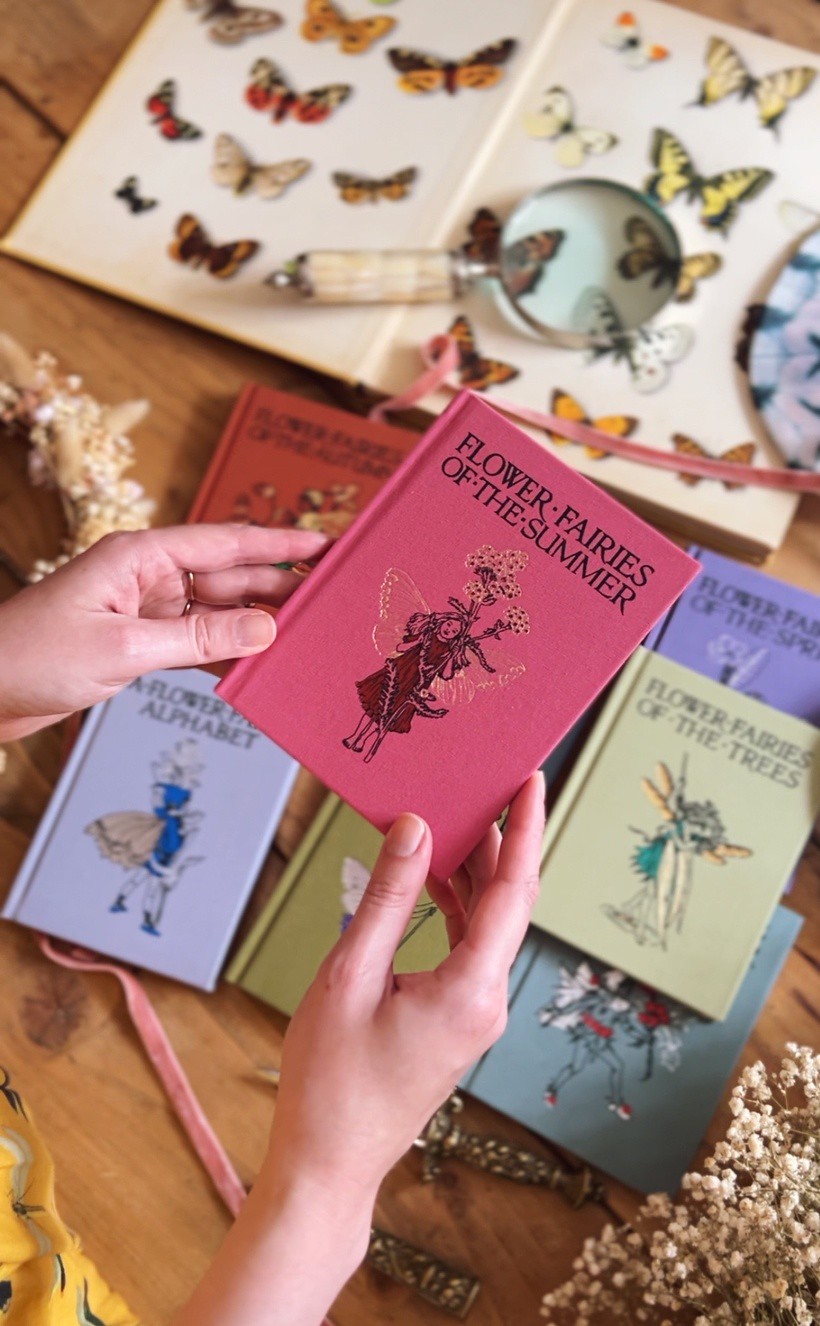 Re-read a cozy, nostalgic book. I am quite a fan of romances and fantasy books in the summer, but there’s something really relaxing about re-reading a book I enjoyed when I was younger. There’s no surprises in the text and sometimes the story will take you back to the moments when you first read it, when you were younger and life seemed to move a bit slower. I find it so nostalgic to go back and read books I loved as a child or teenager; it also helps me think of recommendations for my nieces and nephews and always cures me of reading slump.
Visit a local garden or park. I can not think of anything worse than wasting a good day indoors…although of course many of our schedules don’t allow outdoor adventures at the drop of the hat! However with the sun setting later many parks have extended their hours and getting a walk or visit into your local garden after work is more possible now than ever. I really enjoy visiting National Trust gardens as they’re so well looked after and always feature a wide variety of flowers.Re-read a cozy, nostalgic book. I am quite a fan of romances and fantasy books in the summer, but there’s something really relaxing about re-reading a book I enjoyed when I was younger. There’s no surprises in the text and sometimes the story will take you back to the moments when you first read it, when you were younger and life seemed to move a bit slower. I find it so nostalgic to go back and read books I loved as a child or teenager; it also helps me think of recommendations for my nieces and nephews and always cures me of reading slump. Bake with fresh berries. I get fresh strawberries nearly every week of summer while they’re in season and when visiting my family I ate a peach a day! There’s something really perfect about eating the fruit in its proper season and savoring that fresh flavor of summer—learning a new recipe that also incorporates that fruit is even better! My mother makes a really delicious strawberry bread and that’s on my list to try this summer, but there’s so many recipes you could try: blueberry muffins, grilled peaches, strawberry pie, the list goes on! I don’t bake much but every time I do find a good recipe it becomes part of the routine, so adding even only one recipe every few months means that in a few years I’ll have a wide variety of different things I can comfortably bake and cook. Sometimes we get so intimidated by not knowing how to do much or not being an expert at something, but if we look at things from a longterm perspective we only need to learn a little bit by bit to know a lot one day.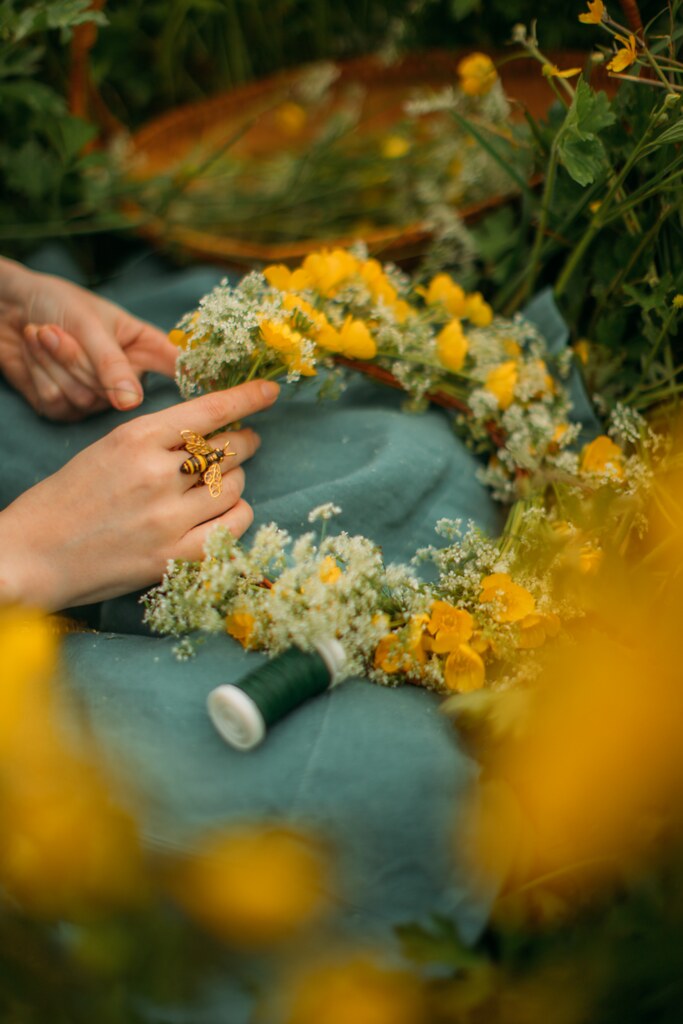 Make a flower crown. Flower crowns for me are one of my ultimate expressions of appreciation for nature. Whenever I make one I spend time outside slowly observing what is in bloom around me and trying to collect a variety of different wildflowers. I do my research on what I’m picking so I can know it’s safe, learn to identify more plants, and look into some of the lore surrounding it. The whole act is one of observation, studying, appreciation, and then while making it I get to bathe in the sounds of nature and work on a familiar task with my hands. Studies show as well that when we work on mundane or familiar tasks to us (like washing dishes) it actually opens up our minds to more creative thought, so by engaging my hands in a physical task that is familiar I can also let my thoughts wander more freely.
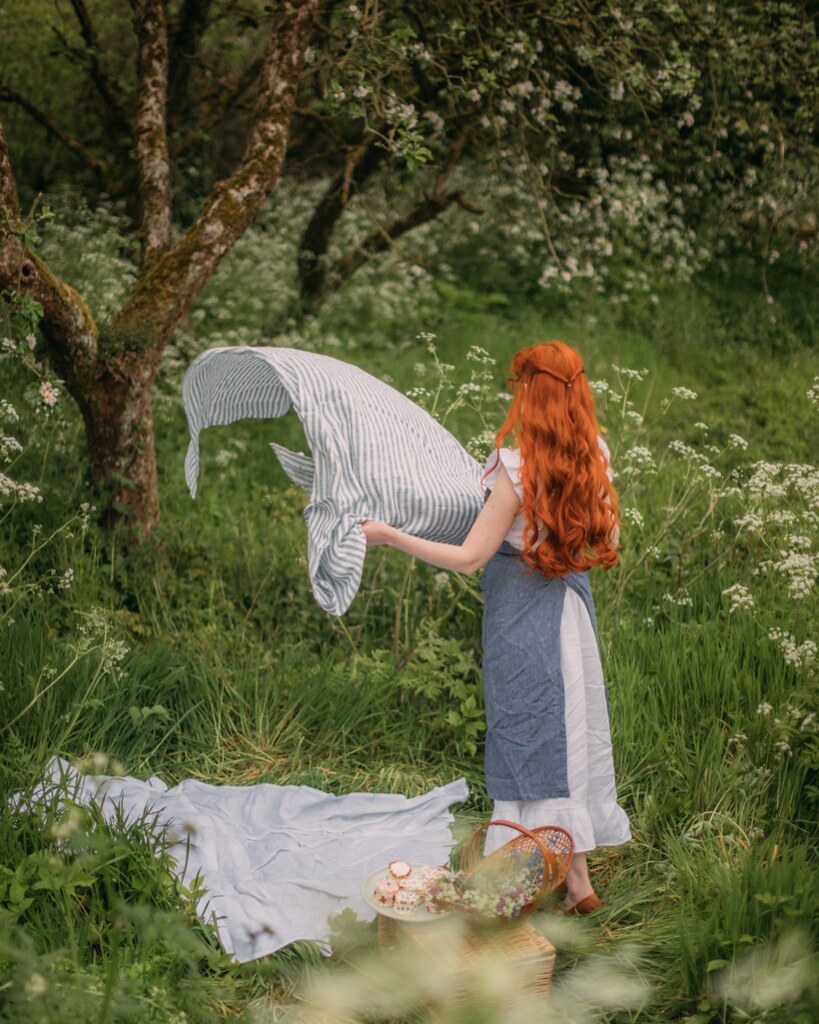 Eat a meal outside. While this could look like a perfectly planned picnic in a field of wildflowers, sometimes it’s also as simple as a takeaway or bowl of cereal enjoyed on the front steps of my house. Mercurial Irish weather makes me appreciate the sunshine and warmth when we have it, so I don’t always need an elaborate set up—just the sun on my skin and the breeze in my air is enough. Sometimes I like to take Solomon’s bowl outside and let him dine “al fresco” as well! Seems like a treat for him as much as me.
Make a flower crown. Flower crowns for me are one of my ultimate expressions of appreciation for nature. Whenever I make one I spend time outside slowly observing what is in bloom around me and trying to collect a variety of different wildflowers. I do my research on what I’m picking so I can know it’s safe, learn to identify more plants, and look into some of the lore surrounding it. The whole act is one of observation, studying, appreciation, and then while making it I get to bathe in the sounds of nature and work on a familiar task with my hands. Studies show as well that when we work on mundane or familiar tasks to us (like washing dishes) it actually opens up our minds to more creative thought, so by engaging my hands in a physical task that is familiar I can also let my thoughts wander more freely.Eat a meal outside. While this could look like a perfectly planned picnic in a field of wildflowers, sometimes it’s also as simple as a takeaway or bowl of cereal enjoyed on the front steps of my house. Mercurial Irish weather makes me appreciate the sunshine and warmth when we have it, so I don’t always need an elaborate set up—just the sun on my skin and the breeze in my air is enough. Sometimes I like to take Solomon’s bowl outside and let him dine “al fresco” as well! Seems like a treat for him as much as me. Handwrite a letter or send a postcard. Another form of slowing down and practicing thoughtfulness comes in the from of handwriting letters; we so rarely take the time to write snail mail or even send physical postcards these days. Whether it’s a local postcard from a museum or one you picked up on travels, why not take a few minutes to think of something poignant to share with a friend and mail it off?
*this post was originally shared on my Patreon page; for more regular posts and exclusive content become a patron for as little as $3 a month with no long term commitment
 I often get asked how I identify different plants and flowers so I thought I would put together a few tips to help you on your journey in nature and foraging. I haven’t written this type of post before because I still feel so far from an expert; I feel confident in the plants I know but I still go out and see so many different plants that I can’t even start to identify. But I hope that is an encouragement for you as well because you don’t need to know everything; every new bit of knowledge is interesting and worthwhile and I don’t think we’re ever done being students of the world.
Start by narrowing things down to a specific subject and region, at least focus on identifying one type of plant on a walk. Instead of walking out and trying to identify as much as I can, I focus on one or two flowers. I use a little book that helps me identify many wildflowers in my region, but it isn’t useful for non-native plants (at least recent non-native plants), trees, bushes, more cultivated flowers, etc. So unless I want to carry multiple books I usually focus on one type of plant at a time. I also find narrowing the focus helps me retain information better. In spring I’m pretty focused on flowers and don’t worry too much about other greeneries or things in nature. In autumn I spent a bit more time trying to learn more mushrooms—although mushrooms are so scary lol because they have too many lookalikes! But choosing an area to study, like flowers or wild fruits will help you find what further tools you’ll need. Books specific to a small subject tend to be more detailed and helpful than broader foraging or plant identification books. And you’ll probably be focused on learning plants where you are, so your region will be that.
Carry a book with you. I’ll share some book suggestions below, but I don’t think I can oversell how wonderful it is to have a book on hand with either photographs or detailed illustrations and descriptions to help you identify plants. If it’s small enough you can scroll through the book just looking at pictures until you see something similar; or if you have an idea of what you think it is you can search the name in the back and then compare the description to what you’re seeing. They should have details on color, size, where it’s growing, scent, roots, stem, etc that all help you accurately identify the plant.
I often get asked how I identify different plants and flowers so I thought I would put together a few tips to help you on your journey in nature and foraging. I haven’t written this type of post before because I still feel so far from an expert; I feel confident in the plants I know but I still go out and see so many different plants that I can’t even start to identify. But I hope that is an encouragement for you as well because you don’t need to know everything; every new bit of knowledge is interesting and worthwhile and I don’t think we’re ever done being students of the world.
Start by narrowing things down to a specific subject and region, at least focus on identifying one type of plant on a walk. Instead of walking out and trying to identify as much as I can, I focus on one or two flowers. I use a little book that helps me identify many wildflowers in my region, but it isn’t useful for non-native plants (at least recent non-native plants), trees, bushes, more cultivated flowers, etc. So unless I want to carry multiple books I usually focus on one type of plant at a time. I also find narrowing the focus helps me retain information better. In spring I’m pretty focused on flowers and don’t worry too much about other greeneries or things in nature. In autumn I spent a bit more time trying to learn more mushrooms—although mushrooms are so scary lol because they have too many lookalikes! But choosing an area to study, like flowers or wild fruits will help you find what further tools you’ll need. Books specific to a small subject tend to be more detailed and helpful than broader foraging or plant identification books. And you’ll probably be focused on learning plants where you are, so your region will be that.
Carry a book with you. I’ll share some book suggestions below, but I don’t think I can oversell how wonderful it is to have a book on hand with either photographs or detailed illustrations and descriptions to help you identify plants. If it’s small enough you can scroll through the book just looking at pictures until you see something similar; or if you have an idea of what you think it is you can search the name in the back and then compare the description to what you’re seeing. They should have details on color, size, where it’s growing, scent, roots, stem, etc that all help you accurately identify the plant.
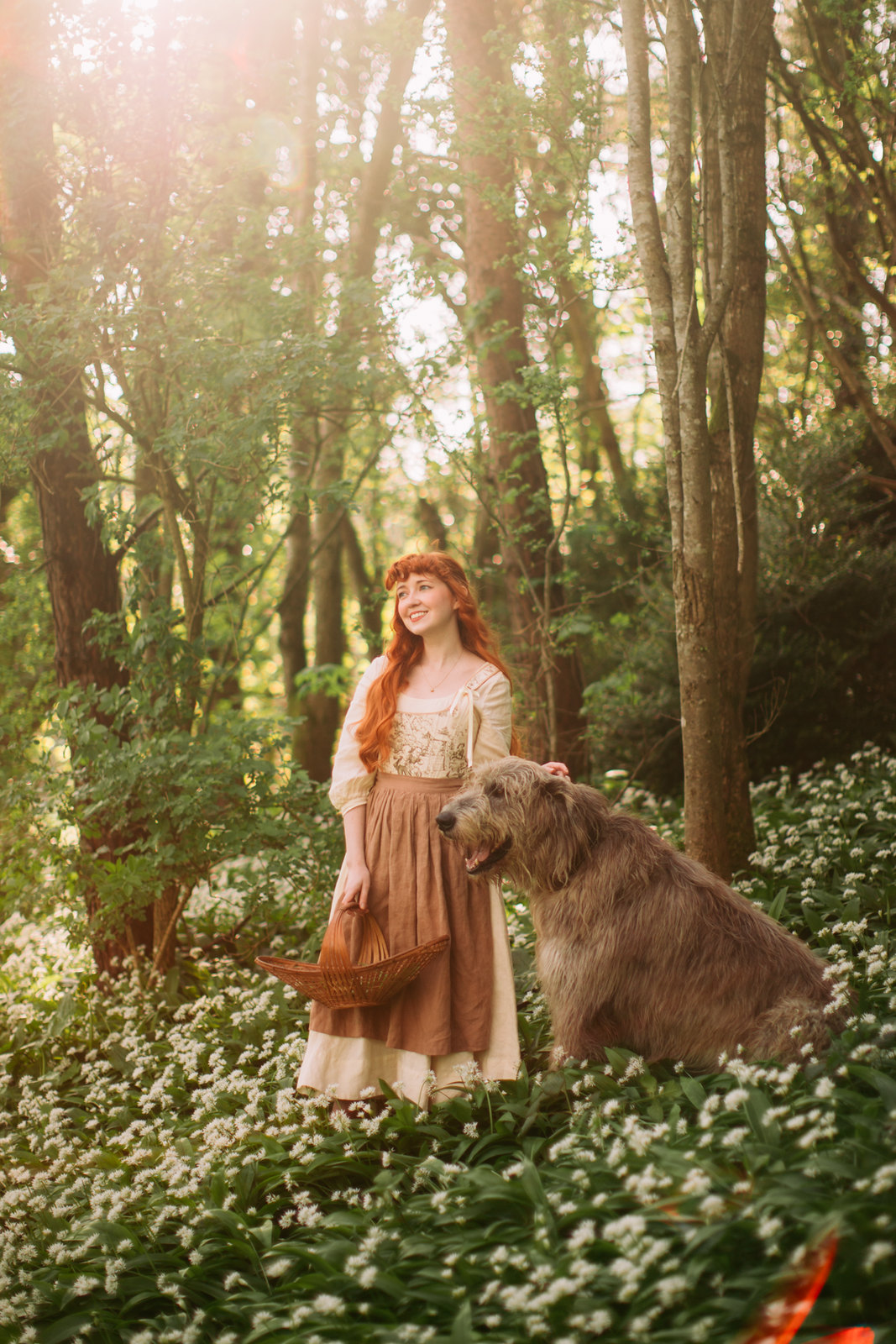 Use an app. There’s numerous apps out now where you can take a picture of the plant you are seeing, upload it, and the app will compare that picture with other images on file and offer suggestions of what the plant might be. I find these a bit hit and miss, but they can be really useful tools and they’ll probably continue to get better. One I use fairly often is GardenAnswers; I find it good for identifying flowers and specifically flowers in gardens that I visit (ones that might not be native and are more cultivated, etc). There’s also apps for foragers and ones specifically for trees; the Woodland Trust has a British tree identification app that helps you identify trees through a series of prompts/questions about what you’re observing (like leaf shape, bark appearance, etc).
Google! Google image search is also a very valid option. We have to remember our searches are only as smart as we are, so the more detail you can give the search the more accurate results you will get. If you can describe parts of the plant (like sepals, or stamen, is the stem hairy or smooth, is it hollow, are there multiple flowers on a single stem or one flower per stem, etc) then you’re going to get more specific and accurate results. If you type in more generic descriptions you’ll get loads of results and have to scroll longer to try confirm. Instead of Google Image search, I look up websites that list regional plants. For example in the autumn when I was collecting mushrooms I looked at
Use an app. There’s numerous apps out now where you can take a picture of the plant you are seeing, upload it, and the app will compare that picture with other images on file and offer suggestions of what the plant might be. I find these a bit hit and miss, but they can be really useful tools and they’ll probably continue to get better. One I use fairly often is GardenAnswers; I find it good for identifying flowers and specifically flowers in gardens that I visit (ones that might not be native and are more cultivated, etc). There’s also apps for foragers and ones specifically for trees; the Woodland Trust has a British tree identification app that helps you identify trees through a series of prompts/questions about what you’re observing (like leaf shape, bark appearance, etc).
Google! Google image search is also a very valid option. We have to remember our searches are only as smart as we are, so the more detail you can give the search the more accurate results you will get. If you can describe parts of the plant (like sepals, or stamen, is the stem hairy or smooth, is it hollow, are there multiple flowers on a single stem or one flower per stem, etc) then you’re going to get more specific and accurate results. If you type in more generic descriptions you’ll get loads of results and have to scroll longer to try confirm. Instead of Google Image search, I look up websites that list regional plants. For example in the autumn when I was collecting mushrooms I looked at  Follow local foragers on social media.
 My
My 



 That’s the whole collection and